Click on the small images below to see an enlarged view, which opens in a new browser tab.
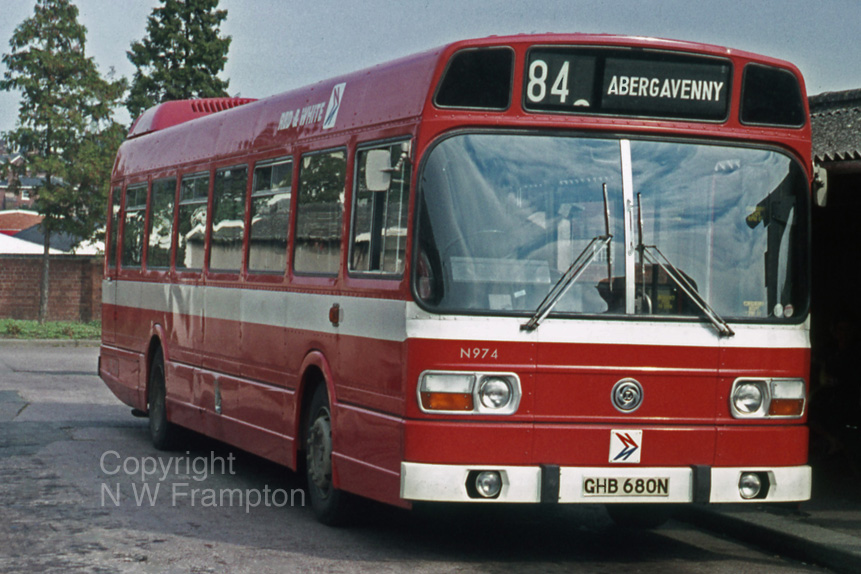
Red & White N974 (GHB680N) is seen at Hereford Bus Station. The slightly odd appearance of the 'H' on the registration plate is a result of the deterioration of the original transparency over the last 30 years!
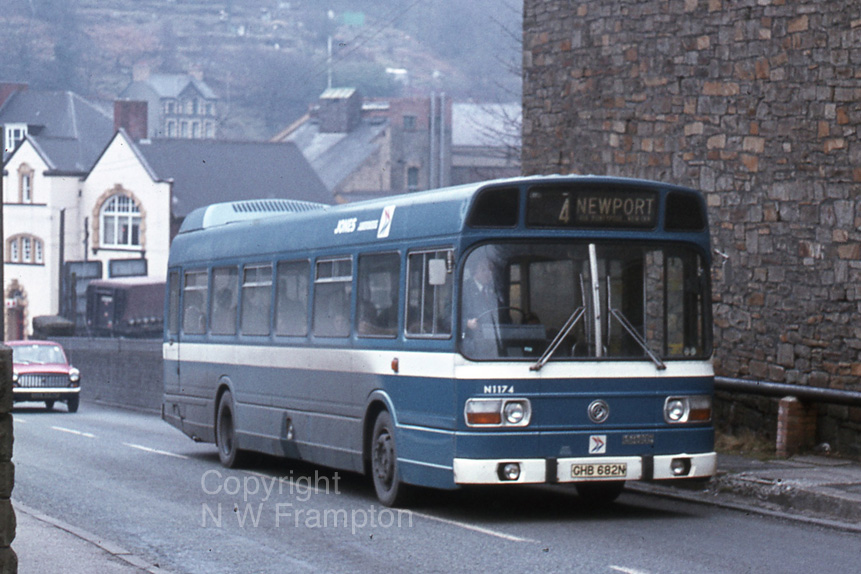
Jones N1174 (GHB682N) shows the blue livery, unique to this NBC subsidiary, as it climbs at Aberbeeg Junction on service 4 from Ebbw Vale to Newport.
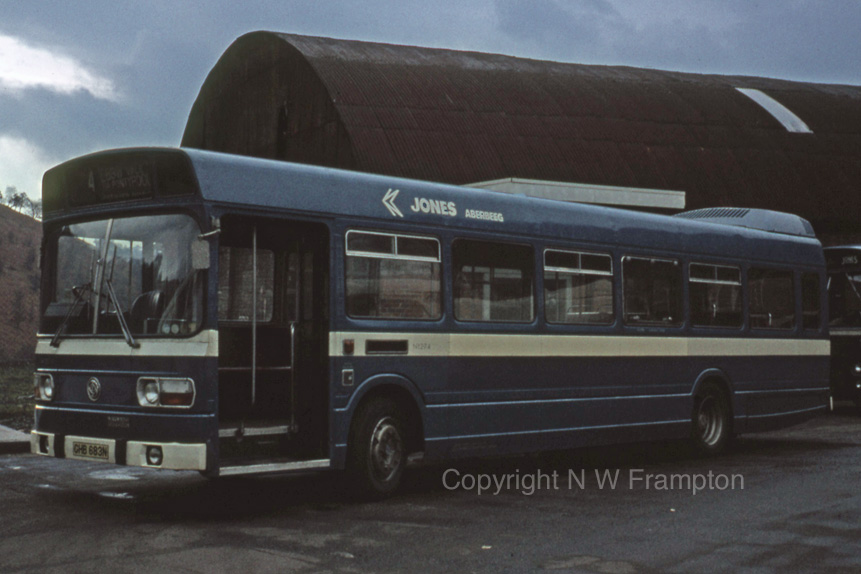
Jones N1274 (GHB683N) on a rather overcast day at the depot at Warm Turn, Aberbeeg.
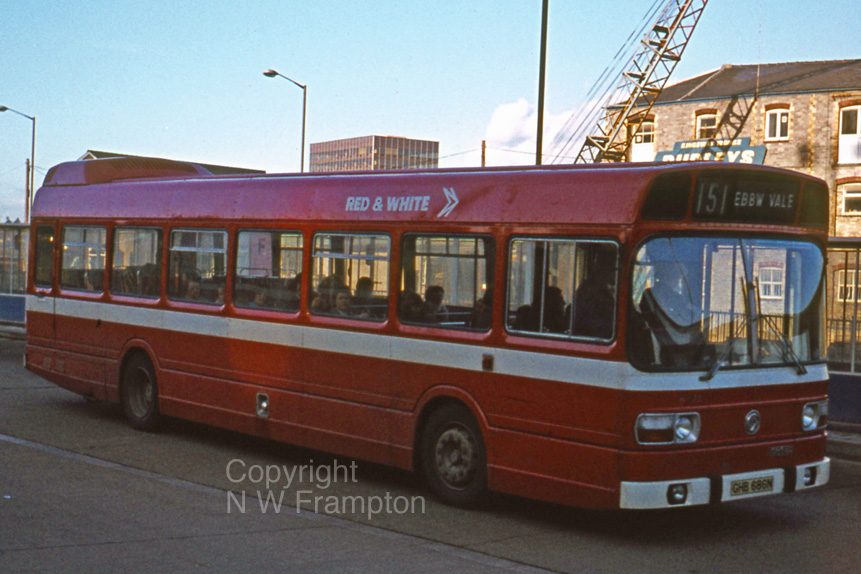
Red & White N375 (GHB686N) leaving Newport on service 151 to Brynmawr via Ebbw Vale. The 151 was a rather indirect route to Brynmawr, and another service would have reached Brynmawr before the 151 had even arrived in Ebbw Vale. Hence the destination blind showing 'Ebbw Vale' for the first part of the journey; this would have been changed to show 'Brynmawr' when the vehicle reached Aberbeeg.
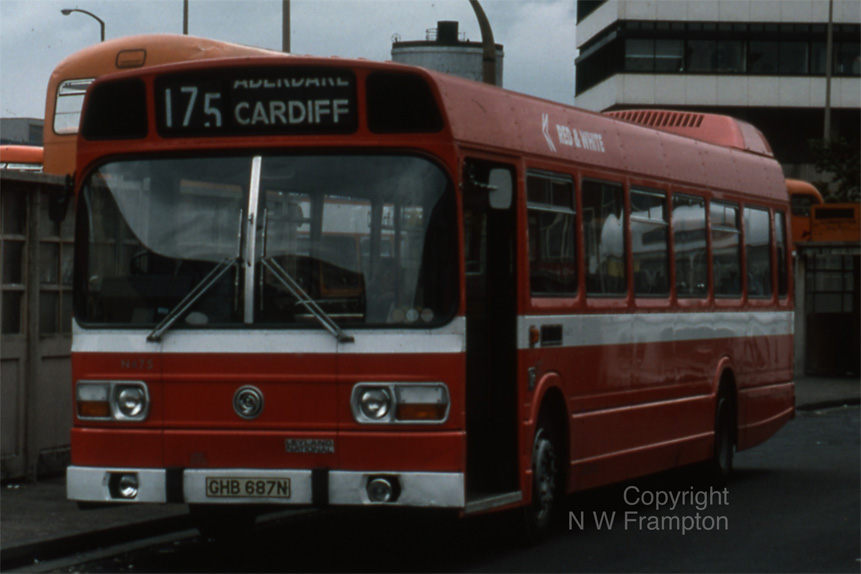
Red & White N475 (GHB687N) in Cardiff Bus Station, displaying a 'Leyland National peculiarity' - the tendency for destination blinds to slip. Of course, it may be that the driver had not positioned the blind correctly, but the slippage was a known problem, that sometimes confused passengers if it slipped too far! The 175 service operated between Cardiff and Hirwaun/Neath or Swansea via Aberdare, and the staff at Aberdare had already agreed to one-person-operation of large single deckers by 1975, unlike their colleagues in the Monmouthshire valleys who would not consider OPO for any vehicle with more than 45 seats.
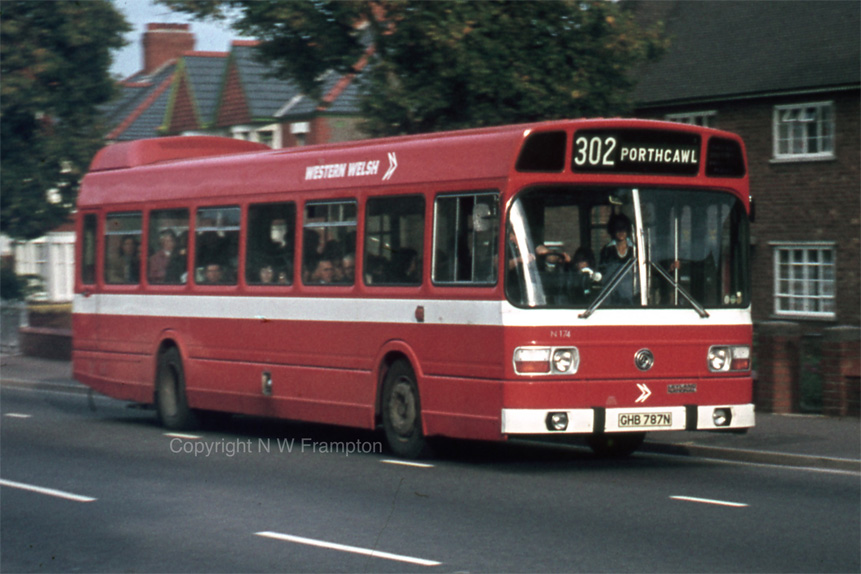
Western Welsh N174 (GHB787N), allocated to Cardiff (Penarth Road) Depot, operating an evening journey on service 302 to Bridgend and Porthcawl, seen here in Ely, one of the western suburbs of Cardiff and near to the Western Welsh Head Office.
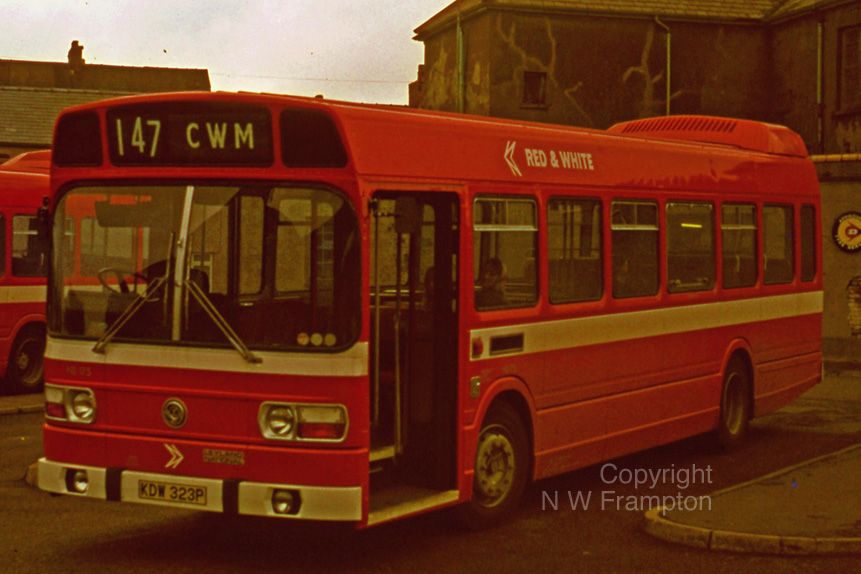
Western Welsh NS175 (KDW323P) is seen here shortly after entering service, while on hire to Red & White. The location is Brynmawr Bus Station. In view of the large number of short single deckers in all of the constituent fleets, it is surprising that so few short Nationals were purchased. An Agfa slide that had deteriorated over the years, KDW looked rather purple before some work in Photoshop! There are probably not many services where the route number is just as long as the name of the terminus!
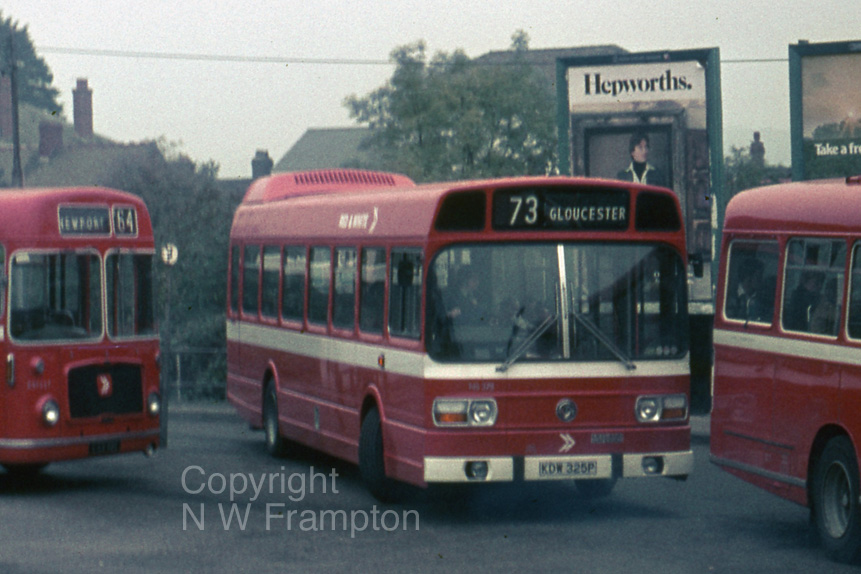
Western Welsh NS375 (KDW325P) was another vehicle that spent the first couple of years of its life on hire to Red & White. Here it is seen at Chepstow Bus Station, surrounded by its elders - and betters!! The 73 service from Cardiff to Gloucester had been a mainstay of the 1971 Bristol RESLs, so that a short National was at least a similarly sized replacement, but little compensation for the loss of the music of a Leyland 680 engined RE!
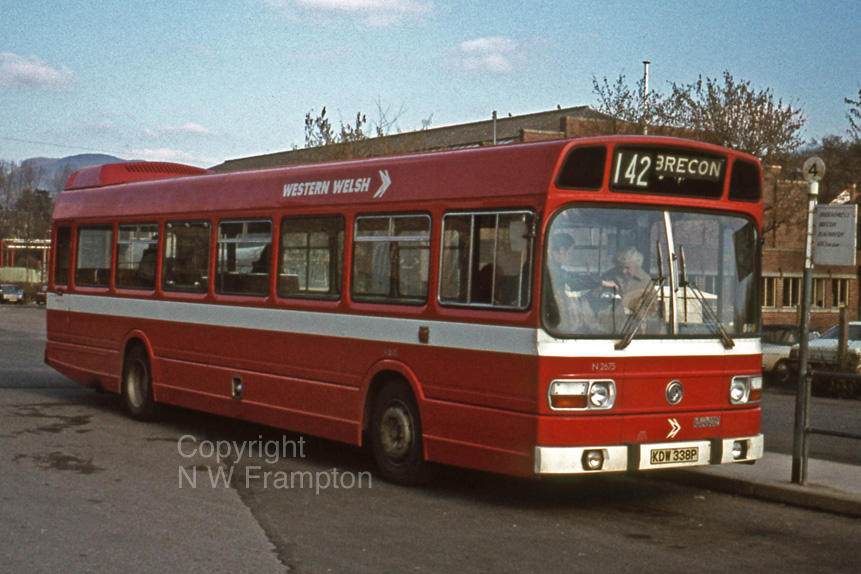
Western Welsh N2675 (KDW338P) at Abergavenny Bus Station on a Saturday afternoon working on service 142 to Brecon. The 142 had previously been operated with Leyland Tiger Cubs, or even Albion Nimbuses, so an 11.3m National would have been unnecessarily large, and unsuited to some of the narrow roads served. Undoubtedly the big windows and low, wide entrance would have seemed better from the passengers' perspective, but I am sure that a short Bristol RE would have done the job just as well, and more economically!
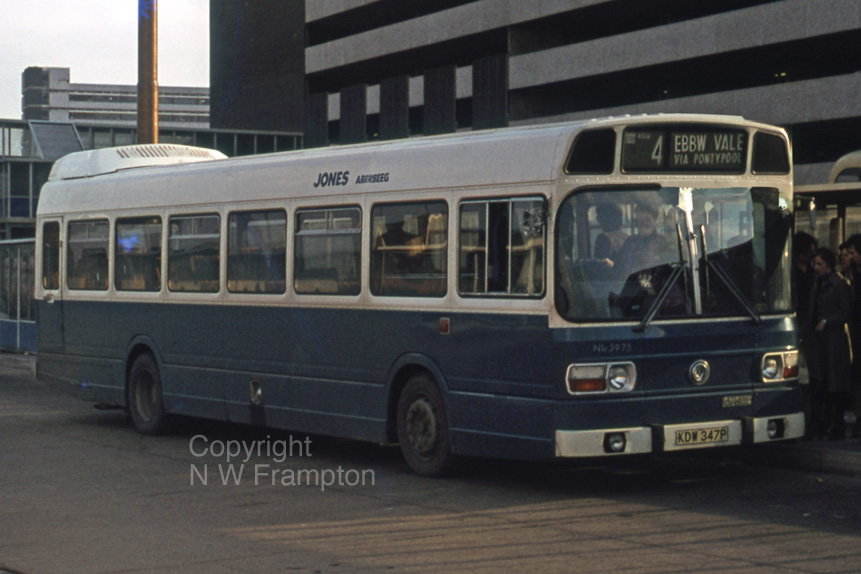
Jones ND3975 (KDW347P) loads in Newport Bus Station. The fares on Jones' service were considerably lower than on the parallel services of Red & White and Western Welsh, so Jones' bus was worth waiting for - hence the number of passengers boarding. The absence of the NBC symbol adjacent to the fleetname was probably an error rather than an unofficial declaration of independence!
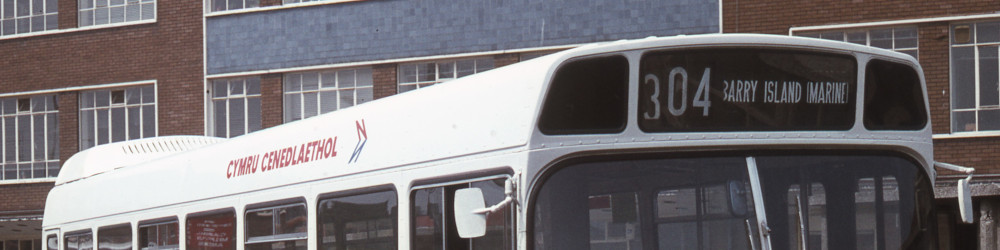
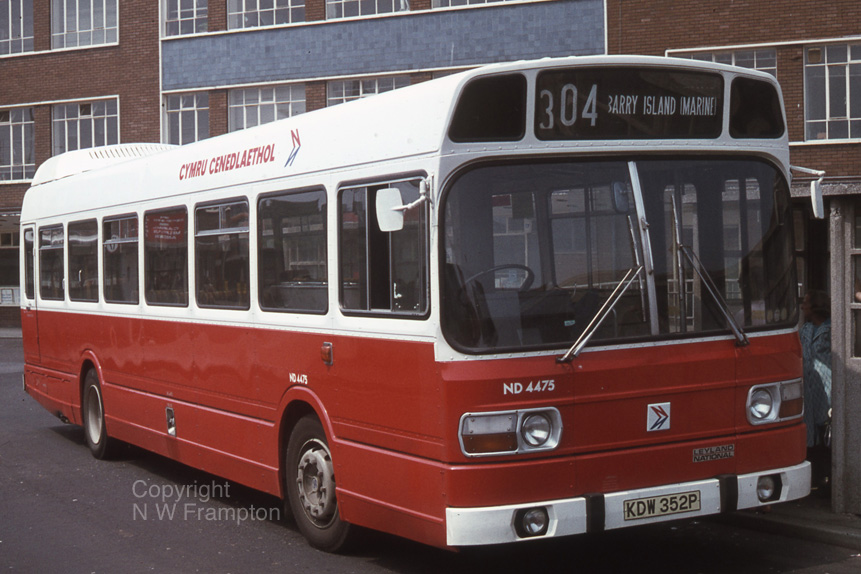
The 304 service from Cardiff to Barry Island via Dinas Powys was generally worked by double deckers at this time, so I suspect that the use of a dual purpose Leyland National would have been brought about by exceptional circumstances.
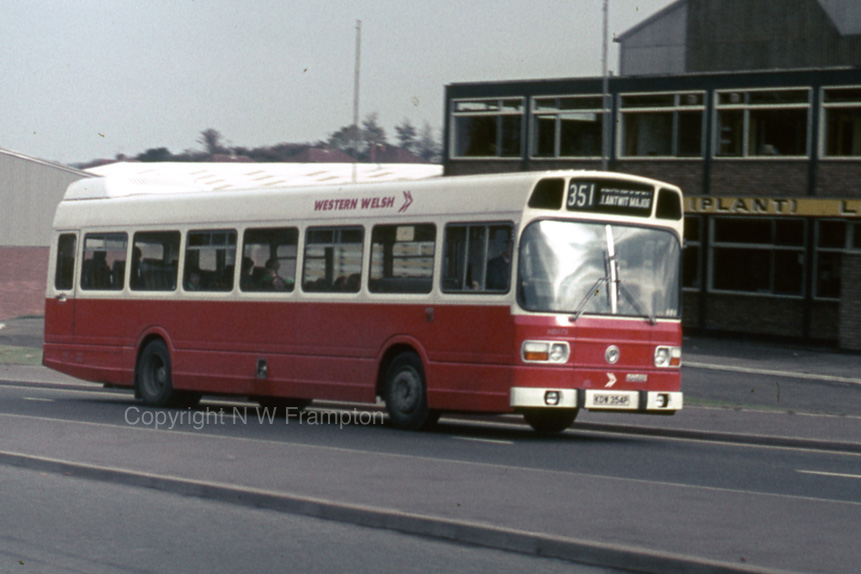
ND4675 (formerly ND875) was another Red & White vehicle that was loaned to Western Welsh for the duration of the period while the old company names survived. The R&W NDs were delivered first, but vehicles of this type were required for the South Glamorgan County sponsored improved limited stop service between Cardiff and Llantwit Major, the start of which coincided with the opening of the Rhoose By-Pass (used by some journeys). The new services 351/352 were operated by the Western Welsh Cardiff (Penarth Road) depot, hence the 'swap' of several of the NDs with WW's own order. The scene is Culverhouse Cross, then the western extremity of Cardiff, but now? Definitely not!
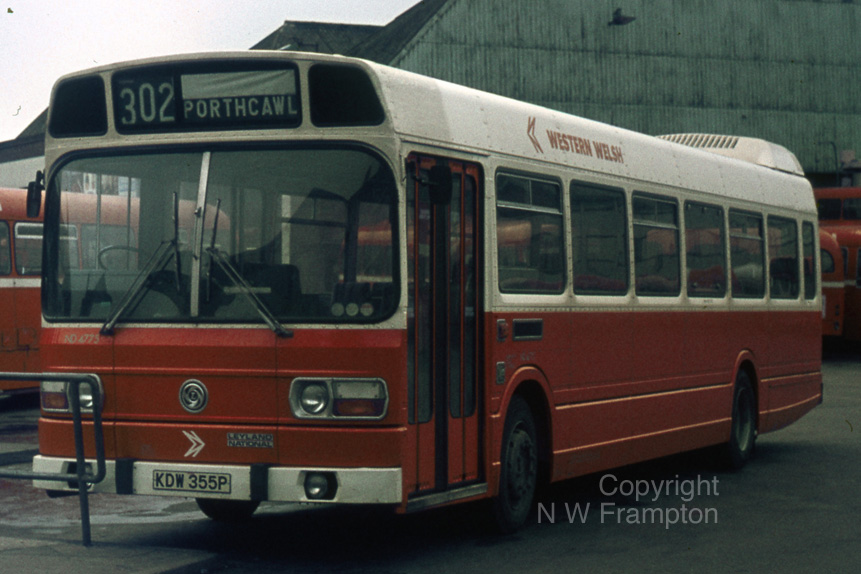
Western Welsh ND4775 is unusual among the 1975 NDs in being a WW vehicle that actually carried WW fleetnames! Seen here at Bridgend Bus Station during a lunchtime, apparently working a 302 service from Cardiff to Porthcawl, though in practice I don't think it was doing anything, as there was no sign of driver or passengers, and the 302 did not usually wait long in Bridgend!
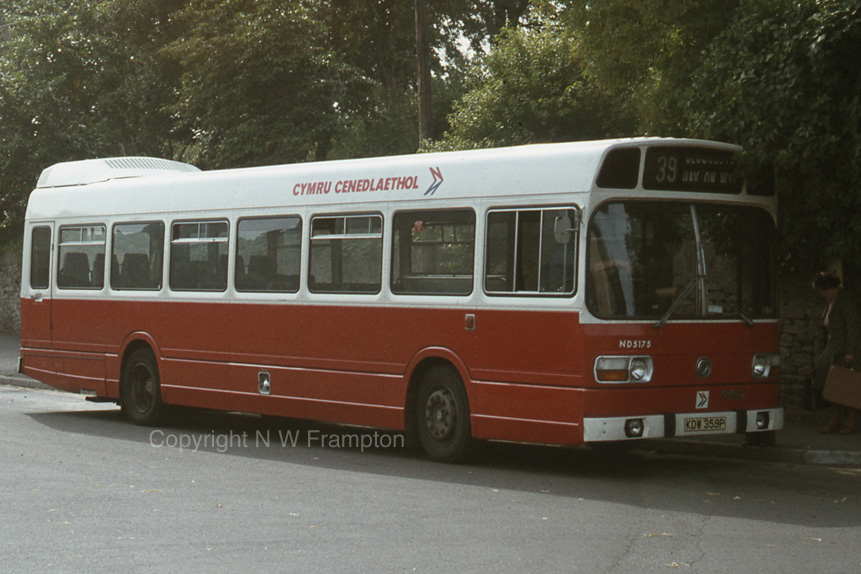
National Welsh ND5175 (KDW359P) was originally a WW vehicle, but was hired to Red & White as part of the swap affecting most of the 1975 NDs. Here it is working on the former Red & White service 39 from Hereford to Hay-on-Wye (the photo is at the latter), demonstrating Leyland National destination blind slippage. Hay-on-Wye is just in Wales, but the rest of the route, including part of the Golden Valley, is in England.
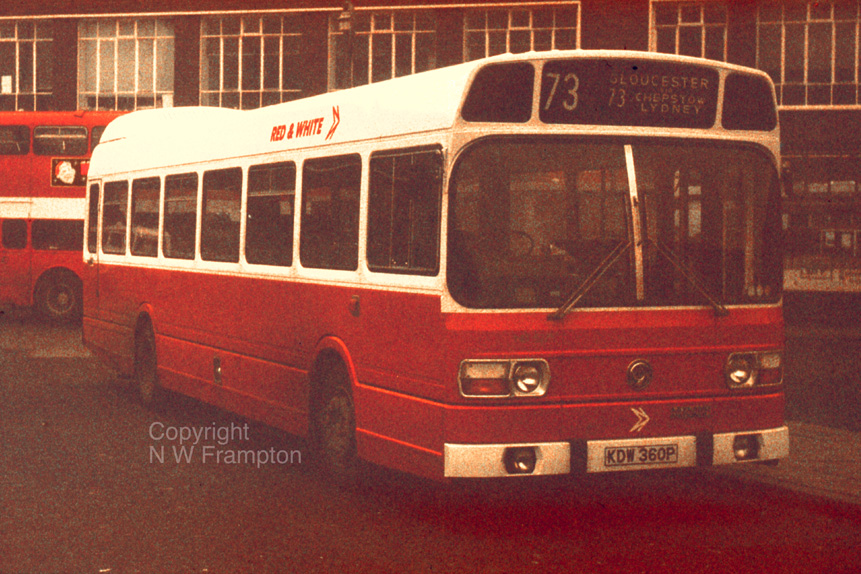
Western Welsh ND5275 (KDW360P) was another of the swapped NDs from the 1975 that went to Red & White from new. Here it is seen (just about!) in a very gloomy Cardiff Bus Station, working on the long service 73 to Gloucester.
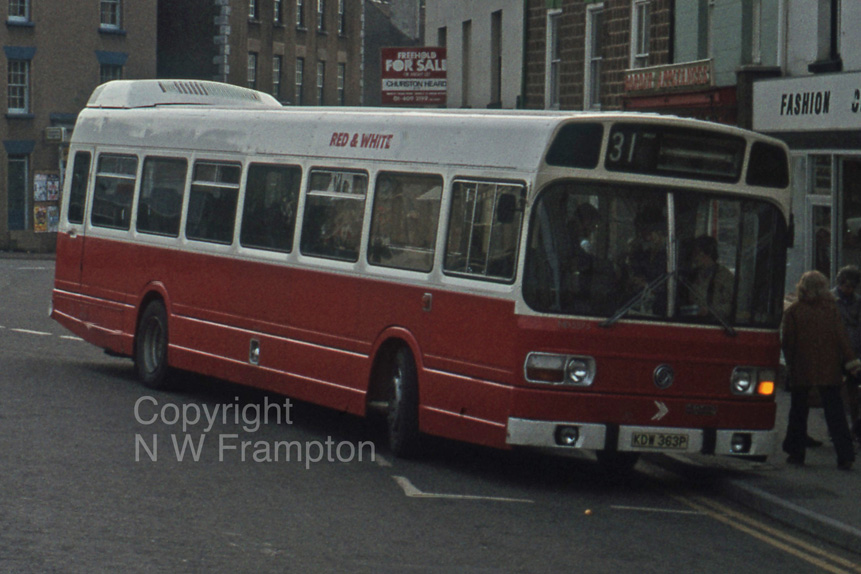
Western Welsh ND5575 (KDW363P), the last of the 1975 NDs, was also swapped and ran for Red & White. Seen here at Coleford Square, working on service 31 to Gloucester. Service 31 had previously been a Lodekka operation, and in the 'post Leyland National' era it reverted to double deck operation - prompting one to question the suitability of the LN as a 'universal bus', as they seemed to be regarded by the WW/R&W/Jones group. Within a year or so of taking this photograph, the view would have changed to show a Welsh fleetname, although this is the nearest point that the route came to Wales, and the border is still 3 or 4 miles away!
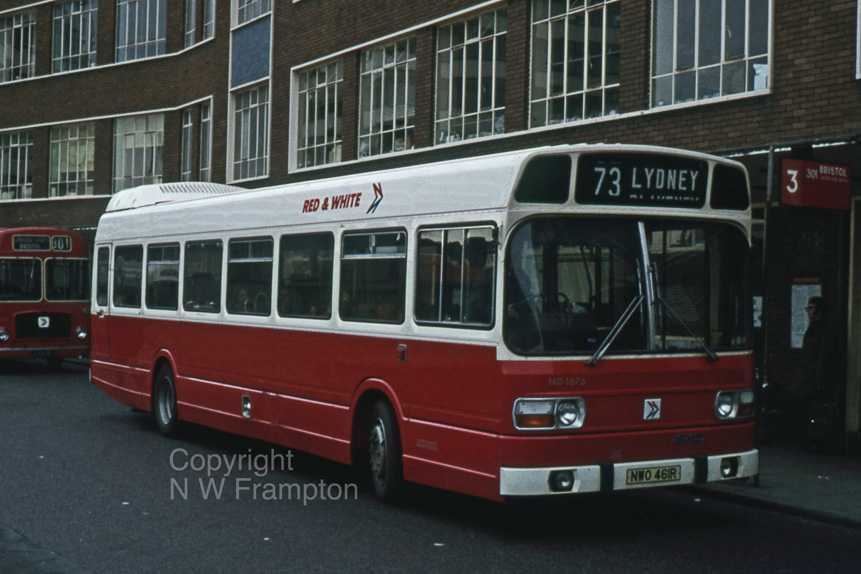
Red & White ND1676 (NWO461R) was the last of R&W's 1976 NDs, indeed their last ND, as no more dual purpose Nationals were bought after 1976. Here, it is in Cardiff Bus Station, on a short working of service 73 to Lydney. 'Short' is a relative term, the journey to Lydney was around two hours, so the use of an ND would have been reasonable, and the 73 had been a single deck service for some years previously.
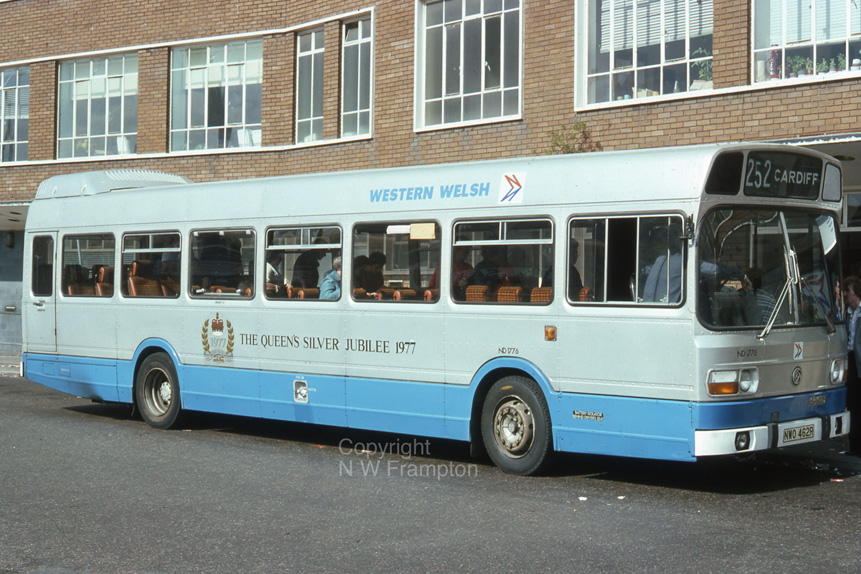
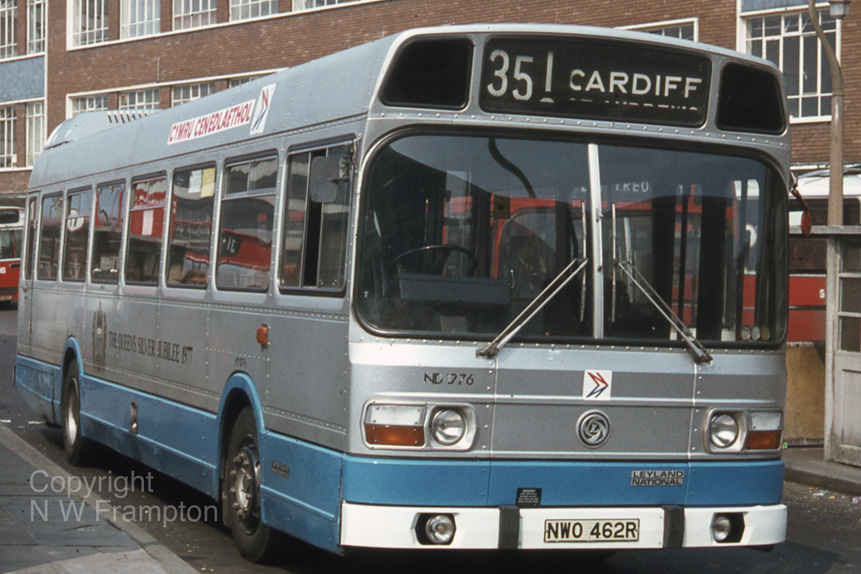
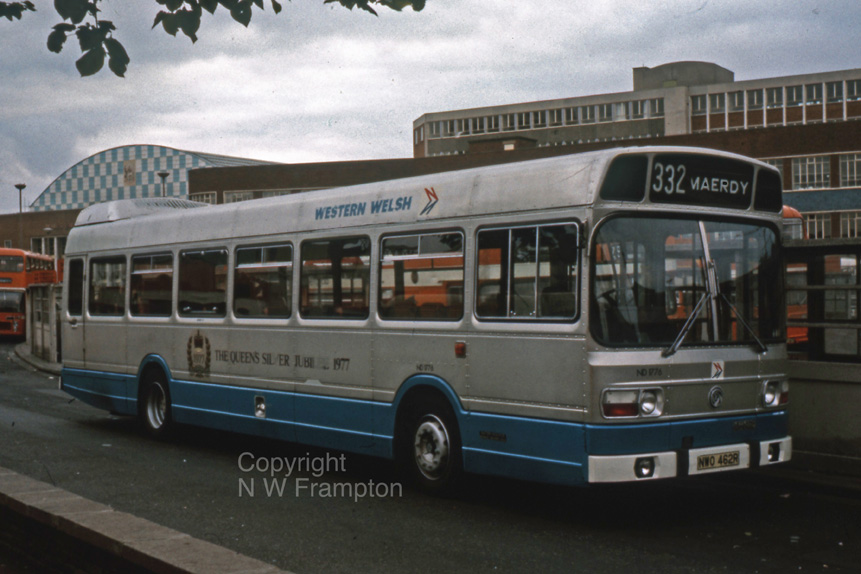
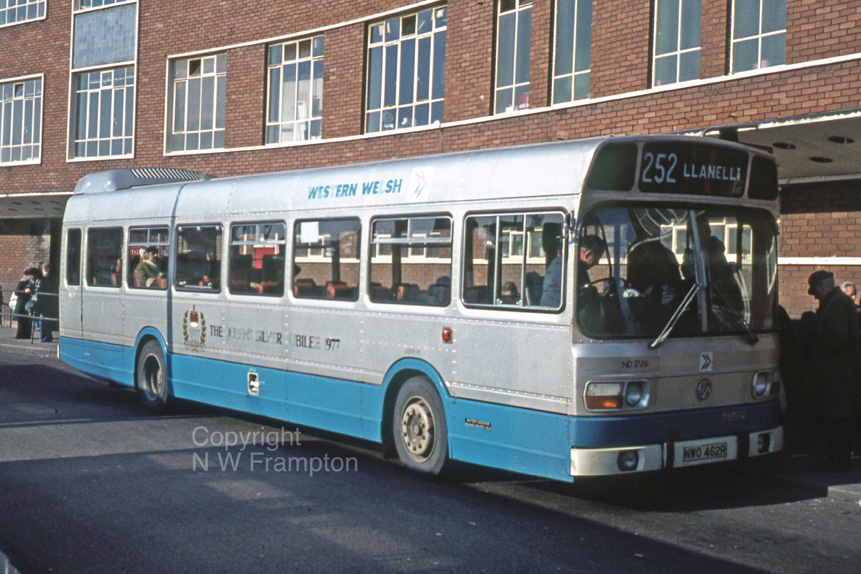
Cardiff Bus Station. The year 1977 was the Queen's Silver Jubilee, and many bus operators painted a bus in a silver livery to commemorate it. The Red & White/Western Welsh group also had a Northern Counties bodied Leyland Atlantean in a similar livery.
Cardiff Bus Station
Cardiff Bus Station
Cardiff Bus Station
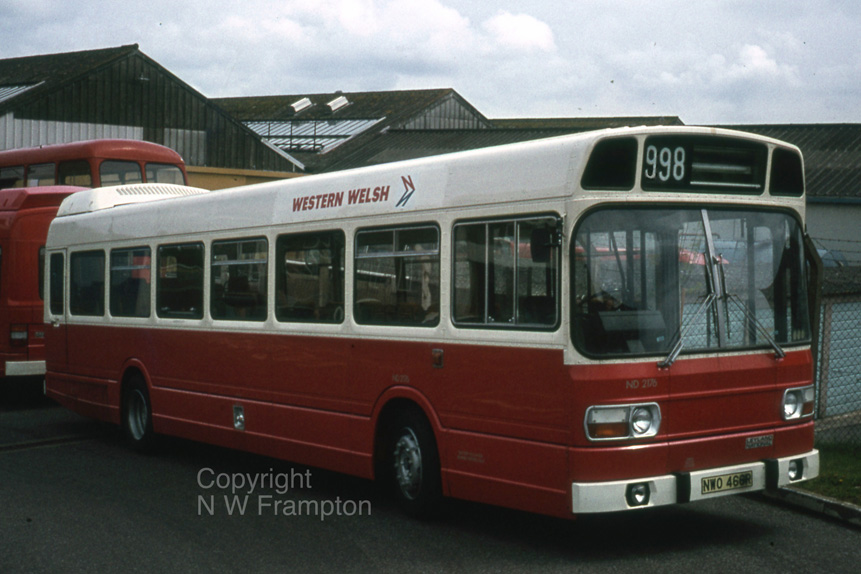
Western Welsh ND2176 (NWO466R) is seen here at Ely Central Works, not long after delivery. Another feature of Leyland Nationals is that they were generally supplied with the last three digits of the 'chassis' number (or vehicle number) showing in the destination blind - in this case the chassis number was 03998.
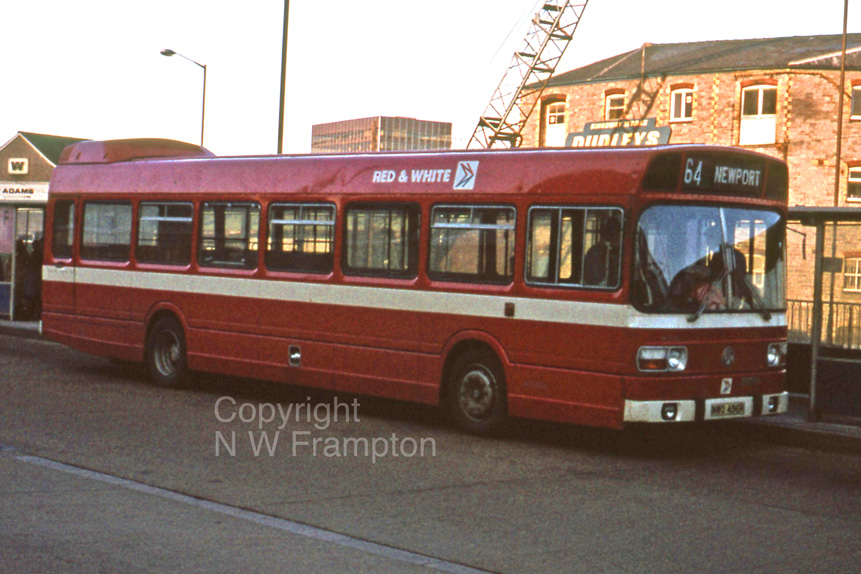
Some of the 1976 deliveries were also swapped between R&W and WW - this is Western Welsh N5176 working for Red & White at Newport Bus Station, on the 64 service to Chepstow via Caldicot.
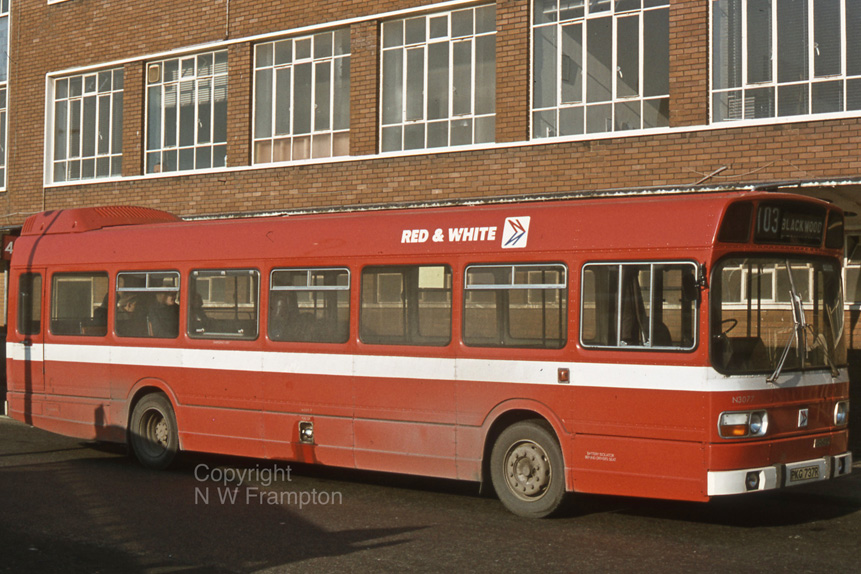
The swapping continued with the 1977 deliveries - this is Red & White N3077 (PKG737R) at Cardiff Bus Station on the 103 service to Blackwood. Although technically a joint service, in practice the 103 was worked by Western Welsh Crosskeys depot. In this case, the fleetname has not been changed.
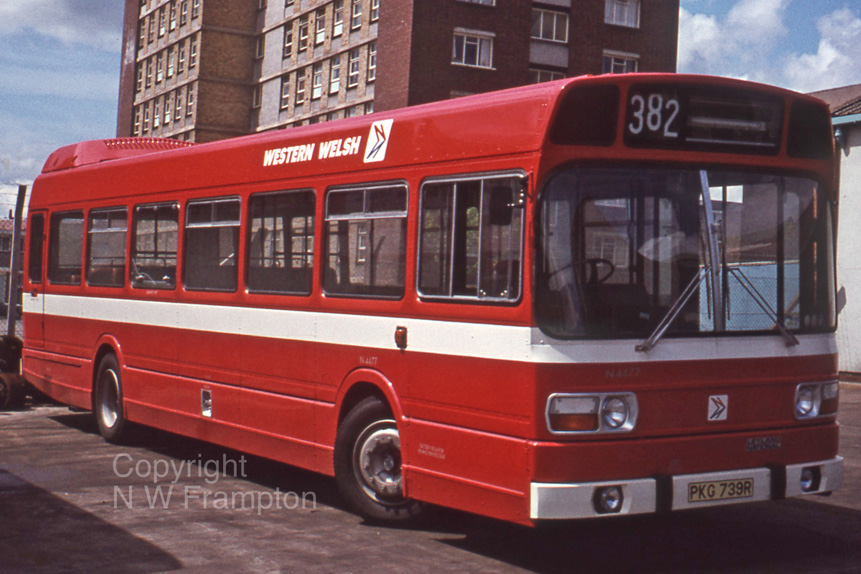
Western Welsh N4477 (PKG739R) at Ely works shortly after delivery. The chassis number is 04382, hence the numbers displayed in the destination blind.
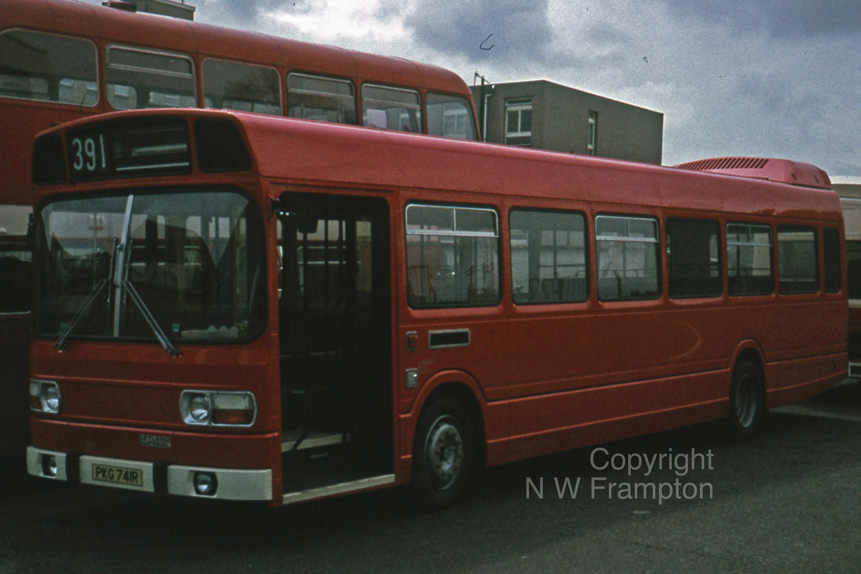
Another photograph taken at Ely works shortly after delivery, Western Welsh N4677 (PKG741R) - chassis number 04391 - before the fleetnames and numbers had been applied - as well as the white waistband.
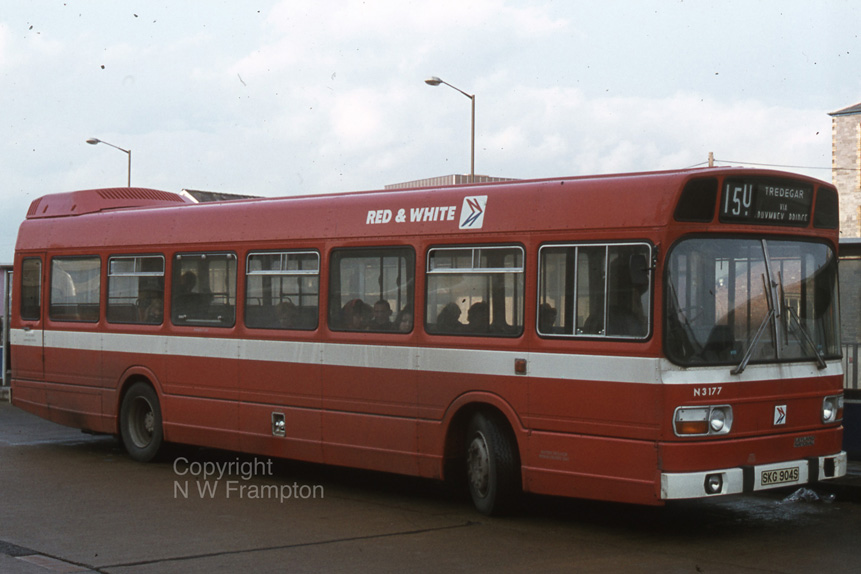
Red & White N3177 (SKG904S) at Newport Bus Station. Service 150 was a long, and then still crew operated, route, initially heading west to Caerphilly and then north along the Rhymney Valley, before turning east again to reach Tredegar. The journey time was over two hours, but the more direct 156 service would have taken you from Newport to Tredegar in a few minutes over an hour and a quarter.
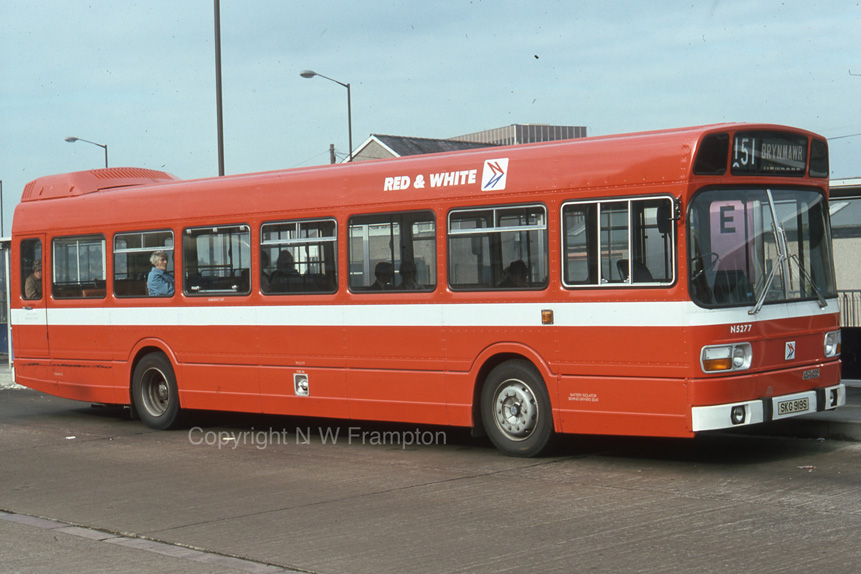
Western Welsh N5277 (SKG919S) also at Newport Bus Station, working on service 151 to Brynmawr via Ebbw Vale. This vehicle was (according to my records) numerically the last to be swapped between WW and R&W, apparently with PKG737R, from September 1977. As explained in the caption to another photo, vehicles operating on service 151 usually displayed 'Ebbw Vale' in the destination window for the first part of the journey, leaving Newport - this instance seems to have been an error.
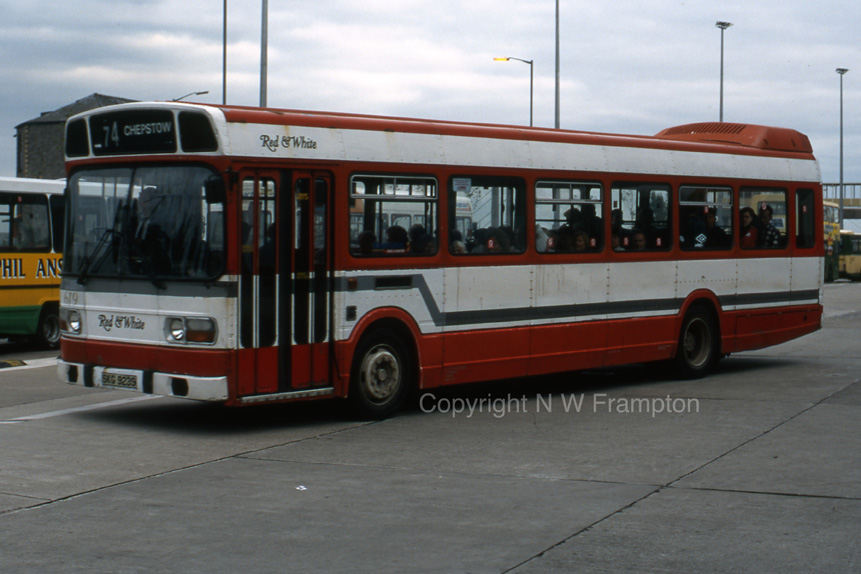
Many years later than the other photographs, Red & White 619 (SKG923S) was new as Western Welsh N5677. By this time the livery had changed, and this 'Red & White' was a different incarnation - not the company that had disappeared into National Welsh back in 1978. I had always regretted the loss of the Red & White name, so it was good to see it revived; and the NBC poppy red never appealed to me, but somehow this livery doesn't work either - perhaps it's the strange step in the grey stripe, or perhaps it is just that white as a relief colour doesn't 'live' in the way that a cream colour does? In any case, the livery didn't survive long, but not really such a great loss. Newport Bus Station, late in 1995.
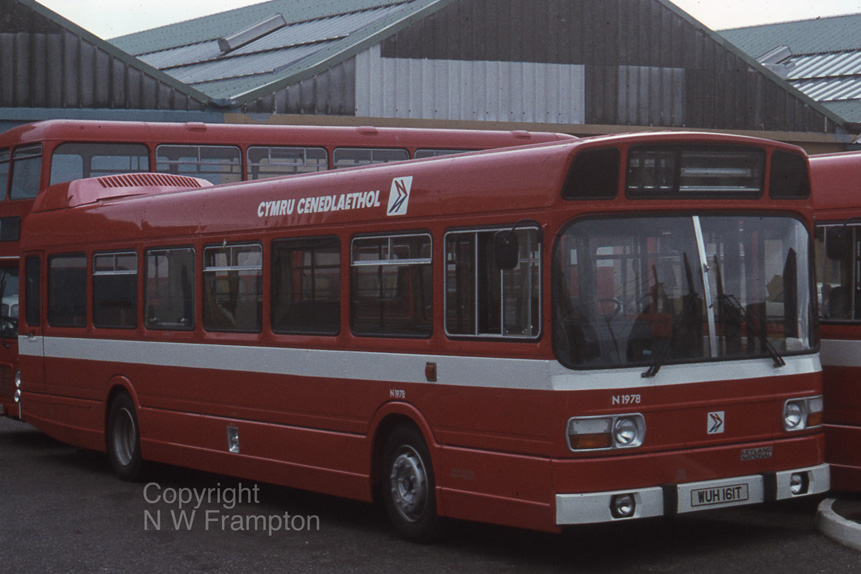
National Welsh N1978 (WUH161T) is seen shortly after delivery at Ely Works, Cardiff, in company with N2078.
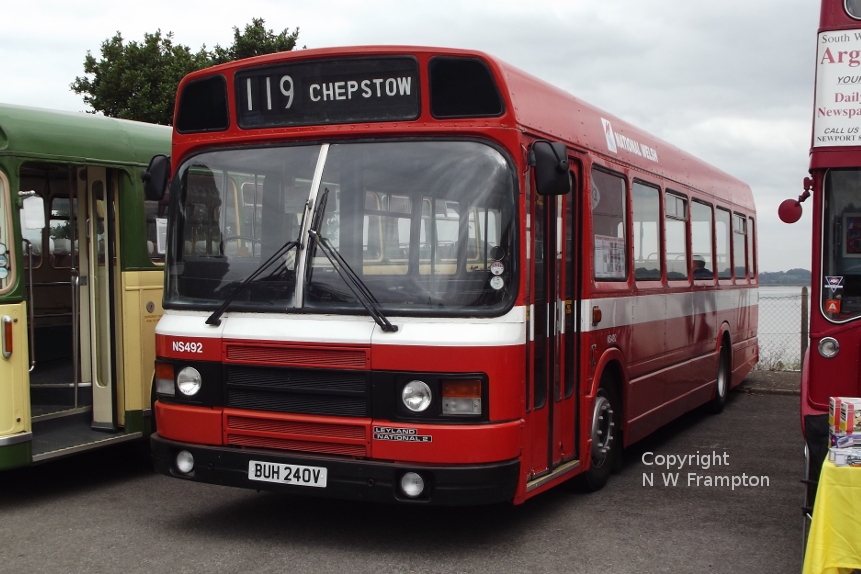
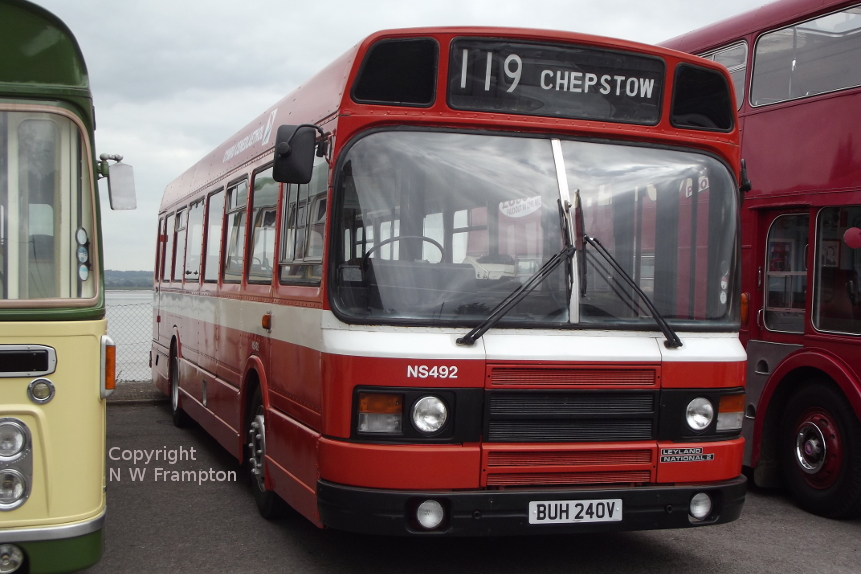
More than 30 years after National Welsh received its last new LNs, I have finally managed to take a couple of photos of one of that final batch. BUH240V was delivered in 1980 as NS8012, and has survived into preservation carrying its final NWOS fleet number. Here it is seen at the Red & White gathering held in Beachley, in September 2014. There may be a few other survivors of the NWOS Nationals, but I believe this is the only one in active preservation.
The Leyland National 2 was, in many respects, what the LN should have been from the beginning. The troublesome 500 series engine was replaced with a derivative of the Leyland 680, together with the option of a Gardner 6HLXB; and the radiator has been moved to the front, which would have improved the weight distribution as well as the cooling. These 3 buses were of the short variety, but the extra length created by the front mounted radiator meant that they were around 35' long, so only marginally shorter than an RELL. A simplified heating system, that had already been available in the short B series version of the mark 1 National, means that the distinctive pod on the roof rear is no longer required.